Octavian: The Man Who Killed Rome’s Republic

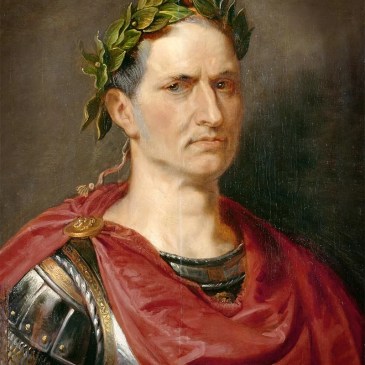
Octavian was Julius Caesar’s grand-nephew and heir. Through a series of tactful alliances—first with the Senate as a pro-republic ally of Cicero opposed to Antony, then an ally of Antony and Lepidus through the second triumvirate —Octavian became the dictator after Julius Caesar. He even marched against Bruttus and Cassius, his grand-uncle’s murderers, until they … More Octavian: The Man Who Killed Rome’s Republic
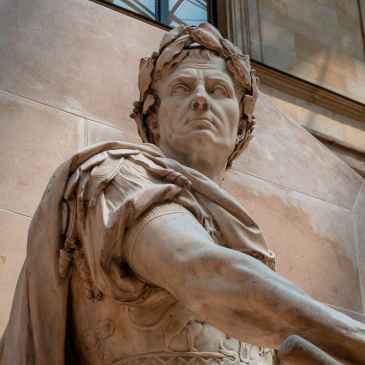
How Julius Caesar Sequestered and Consolidated Power in Rome

Julius Caesar became the most powerful man in the world, but his journey to success was long and bloody. After the death of Sulla—a Roman commander who later became consul and restored strength to the republic’s political traditions—Rome fell under disarray. Everyone who was anyone put their hat in the ring to compete for power. … More How Julius Caesar Sequestered and Consolidated Power in Rome

Aeschylus on the Blowback of Agamemnon’s War

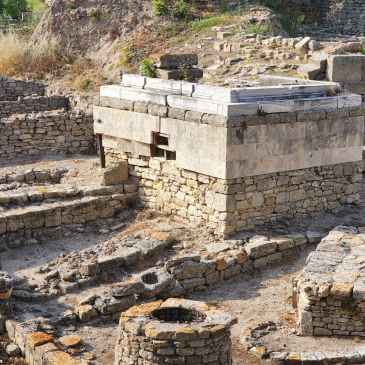
Aeschylus was a Greek playwright. He wrote Agamemnon, which was about the tragedies surrounding Agamemnon, the king of Argos, and his household during the Trojan War. He and his brother Menelaus led the campaign against Troy. While King Agamemnon was successful in his siege, that victory had a price. Aeschylus went into extensive detail on … More Aeschylus on the Blowback of Agamemnon’s War

Death of the Republic

After the Struggle of the Orders in Rome—a political push for the plebeian/poor class to receive representation in the republic—Rome reached its political peak. With more equality in government, the city-state focused on military endeavors and conquest. Three wars ensued against Carthage, called the Punic Wars. That city and most of the modern world were … More Death of the Republic

Struggle of the Orders

There were two classes of people in Ancient Rome. The plebeians were the poor class, consisting of traders, merchants, and artisans. The patricians were the wealthy and powerful, who inherited their status. While many plebeians became wealthy through industrious endeavors, nobody could escape the class they were born in. Classes weren’t determined by wealth. Instead, … More Struggle of the Orders

Epicurus and Epicureanism

            Alexander the Great unified all of Greece under his rule, fulfilled his father Philip the 2nd’s visions for an all-Greek war on Persia, and conquered Asia Minor, Egyp, Athens, Troy, Tyre, and many other nations in the process. His campaign solidified Greece as the world’s superpower. The Hellenistic period started after Alexander’s death. Many … More Epicurus and Epicureanism

Clashing Liberties: The Rule of Law or of Men?

The classical liberal Benjamin Constant noticed a worrisome confusion over ancient and modern liberty during his life. With a clear understanding of the difference, he used his knowledge to write the infamous essay, The Liberty of the Ancients Compared with That of the Moderns. In its most basic form, everyone agrees that liberty is good, … More Clashing Liberties: The Rule of Law or of Men?

Medea and Sweet Revenge

Euripides’ play, Medea, is one the most fascinating and bizarre stories I’ve ever read. Much of Greek plays followed the “tragedy” format, where everything ends horribly. To its definition, the play ends in tragedy. There is no happy ending or justice, and all the protagonists suffer misfortune. In this essay, I’ll summarize and analyze the … More Medea and Sweet Revenge