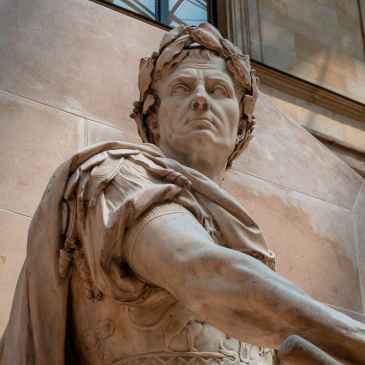
Julio-Claudian and Flavian Dynasties

Rome peaked after Augustus idealized a proven method for emperors to maintain power. The Julio-Claudian and Flavian dynasties contained some of the most notorious, insane, delusional, and erratic emperors in history. This essay seeks to answer whether all were the same or how they differentiated their lunacy. Octavian was very strategic in maintaining a colossal … More Julio-Claudian and Flavian Dynasties
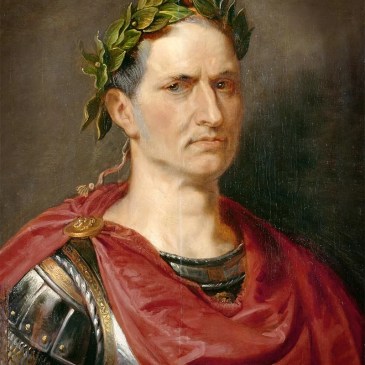
Octavian: The Man Who Killed Rome’s Republic

Octavian was Julius Caesar’s grand-nephew and heir. Through a series of tactful alliances—first with the Senate as a pro-republic ally of Cicero opposed to Antony, then an ally of Antony and Lepidus through the second triumvirate —Octavian became the dictator after Julius Caesar. He even marched against Bruttus and Cassius, his grand-uncle’s murderers, until they … More Octavian: The Man Who Killed Rome’s Republic

How Julius Caesar Sequestered and Consolidated Power in Rome

Julius Caesar became the most powerful man in the world, but his journey to success was long and bloody. After the death of Sulla—a Roman commander who later became consul and restored strength to the republic’s political traditions—Rome fell under disarray. Everyone who was anyone put their hat in the ring to compete for power. … More How Julius Caesar Sequestered and Consolidated Power in Rome

Struggle of the Orders

There were two classes of people in Ancient Rome. The plebeians were the poor class, consisting of traders, merchants, and artisans. The patricians were the wealthy and powerful, who inherited their status. While many plebeians became wealthy through industrious endeavors, nobody could escape the class they were born in. Classes weren’t determined by wealth. Instead, … More Struggle of the Orders

Epicurus and Epicureanism

            Alexander the Great unified all of Greece under his rule, fulfilled his father Philip the 2nd’s visions for an all-Greek war on Persia, and conquered Asia Minor, Egyp, Athens, Troy, Tyre, and many other nations in the process. His campaign solidified Greece as the world’s superpower. The Hellenistic period started after Alexander’s death. Many … More Epicurus and Epicureanism

Clashing Liberties: The Rule of Law or of Men?

The classical liberal Benjamin Constant noticed a worrisome confusion over ancient and modern liberty during his life. With a clear understanding of the difference, he used his knowledge to write the infamous essay, The Liberty of the Ancients Compared with That of the Moderns. In its most basic form, everyone agrees that liberty is good, … More Clashing Liberties: The Rule of Law or of Men?

Medea and Sweet Revenge

Euripides’ play, Medea, is one the most fascinating and bizarre stories I’ve ever read. Much of Greek plays followed the “tragedy” format, where everything ends horribly. To its definition, the play ends in tragedy. There is no happy ending or justice, and all the protagonists suffer misfortune. In this essay, I’ll summarize and analyze the … More Medea and Sweet Revenge

Peloponnesian War

            After Greece defeated the Persian army at Salamis, it wasn’t kumbaya. A house divided cannot stand, but Greece divided anyway. Time passed, and the two dominant city-states—Sparta and Athens—developed independent leagues. They were coalitions between allies. Sparta and its allies made the Peloponnesian League, while Athens and its allies had the Delian League. The … More Peloponnesian War

Prelude to War—An Essay on the Persian Wars

            If history has taught us anything, “Too big to fail” doesn’t exist. Every empire seems to crumble. Does it matter how powerful they are? No.             Persia dominated the world once. Like all the empires before and after them, their influence faded into darkness, and another empire took their place. The closing of the … More Prelude to War—An Essay on the Persian Wars

The Middle Class and Common Sense; How to Avoid Governmental Plunder

Aristotle was Plato’s young prodigy and became a philosopher in his own right. His most infamous pupil was Alexander the Great, but his impact superseded Alexander. We credit Aristotle for multiple advances in science, meteorology, philosophy, and political/government theory. This essay will dissect that last topic—Aristotle’s three types of government, their perversions, and how to … More The Middle Class and Common Sense; How to Avoid Governmental Plunder