The English Civil War

Asher K. Sisneros Western Civilization Since 1492 Tom Woods September 4, 2024 The English Civil War was a war over sovereignty and whether it resided in kings or Parliament. Since James I, the Stuart dynasty toyed with implementing absolutism in England. However, even James I, who supported the political theory, could not implement it effectively, … More The English Civil War

The Defenestration of Prague and Peace of Westphalia

Asher K. Sisneros Western Civilization Since 1492 Tom Woods September 4, 2024 The Thirty Years’ War (AD 1619-1648) was a multi-decade and highly complicated civil war within the Holy Roman Empire. It is often touted as a religious war between Protestant and Catholic forces, and that is true, but it would be unfair to characterize … More The Defenestration of Prague and Peace of Westphalia

Religious Policy of Elizabeth I

Queen Elizabeth I (r. 1558-1603) succeeded Queen “Bloody Mary” Tudor to the throne. Unlike her two siblings, Queen Mary and King Edward VI, she adopted religious agnosticism. Under both of their leaderships, she had conformed to be politically accepted. Under Edward’s reign, she acted Protestant; under Mary, Catholic. Some argue that her faith was disingenuous. … More Religious Policy of Elizabeth I

Saint Bartholomew’s Day Massacre

Throughout the 16th century, France was tattered with religious wars; wars to squash religious pluralism in the country. The Protestant Huguenots were growing in numbers. By 1560, 10 percent of the nation was Protestant. The monarchy tried to mitigate this growth by launching repressive measures against the Huguenots, but those decrees were ignored.  Nobles sided … More Saint Bartholomew’s Day Massacre

The Dutch Revolt

Under Philip II’s reign as the king of Spain, 7 northern provinces declared their independence as the Dutch Republic. The conflict between Spain and the 7 provinces is commonly known as the Dutch Revolt.  As king, Philip adopted militant Catholicism. All the citizens of Spain were forced to participate in religious conformity, including Protestants and … More The Dutch Revolt

The Spanish Revolt

The Spanish Revolt was a series of riots that broke out across Spain during Charles V’s coronation as Holy Roman Emperor in 1519. During that era, there was immense segregation between people of the Low Countries and Spain. Typically, citizens in the Low Countries perceived themselves as more educated and higher class, meanwhile looking down … More The Spanish Revolt

The English Reformation and Its Political Roots

Asher K. Sisneros Western Civilization From 1493 Dr. Thomas E. Woods Jr.  August 19, 2024 Not long after Luther pinned the 95 Theses, Protestant doctrine spread across Europe like a plague. Only a few dissidents in England believed in Protestant theology, but by King Henry VIII’s rule, it became politically advantageous to oppose Catholicism—and more … More The English Reformation and Its Political Roots

Luther’s On the Freedom of the Christian: History of the Reformation

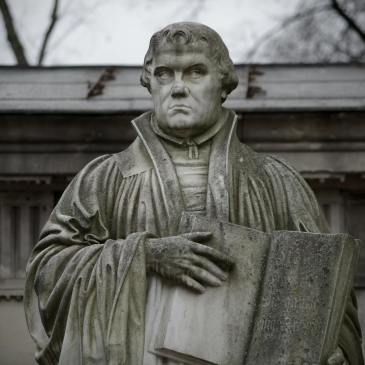
Luther argues that Jesus Christ desires His followers to trust and believe in Him to provide them with salvation. And when they do so, He will glorify them and dress them in garments of truth and righteousness, sanctifying their souls and regenerating their hearts.   … More Luther’s On the Freedom of the Christian: History of the Reformation

The Church on the Eve of Reformation

Leading up to the beginning of the Reformation—when Martin Luther pinned his 95 Theses to the church door in Wittenburg, Germany—the Catholic Church was experiencing noticeable forms of decay and rot. The Reformation was a movement to address the root of these perversions. Some saints within the Catholic Church attempted to address the corruption permeating … More The Church on the Eve of Reformation