Psalms and Eternal Gratification

Data proves that future-minded people are success magnets. It’s far more beneficial to focus on the long-term, in the long-term. In other words, delayed gratification and emphasis on the future usually pay off. Stanford’s marshmallow experiment—where they offered children one marshmallow immediately or two in fifteen minutes—proved that. The study showed that the kids who … More Psalms and Eternal Gratification
Western Civilization Essay: Plato’s Cave Allegory

What is Plato’s cave allegory? It is one of Plato’s many dialogues. Similar to his others, he uses that fictional conversation between Socrates and Glaucon to prove a point. This essay will explore that specific discussion and what Plato’s point was.  In the dialogue, Plato uses his character Socrates (based on the actual person) to … More Western Civilization Essay: Plato’s Cave Allegory

The Sophists and Their Great Adversary

In Ancient Greece, Socrates and the Sophists were in opposition, and their feud was recorded in the history books. Socrates was one of the philosophers to lay the groundwork for rebuttals against the Sophists. His anti-Sophist work was influential for Western Civilization. In this article, I will briefly explain who the Sophists were, what they … More The Sophists and Their Great Adversary

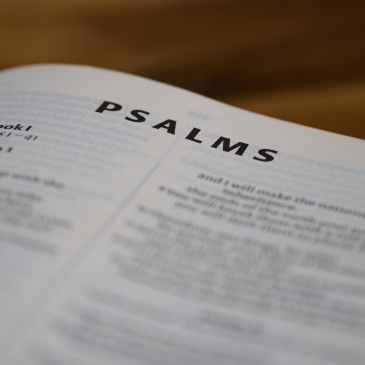
Analysis of Psalms: What Distinguishes ‘Righteous’ from ‘Wicked’?

The Book of Psalms is a sizeable library of prayers and songs, but they all follow a few basic themes, such as fearing God, praising His goodness, and the wicked man’s destruction. Right at the beginning of the book, Psalm 2 introduces the concept of rebellious men rejecting God’s law. David says that God laughs … More Analysis of Psalms: What Distinguishes ‘Righteous’ from ‘Wicked’?

Ancient Greek History: Rationalism, the Building Block of pre-Socratic Philosophy

What was the pre-Socratic philosophy, and why is it relevant? That’s the topic of this essay.   The pre-Socratic philosophy developed in ancient Greece. The pre-Socratic philosophers had a train of thought that was more evidence-driven than their predecessors. Historically, Greek mythologies explained everything. Religion was the basis for everything. While the pre-Socratics didn’t disregard religion, … More Ancient Greek History: Rationalism, the Building Block of pre-Socratic Philosophy

Hector

The Iliad is a book by Homer. It paints the narrative of a war between the Trojans and the Acheans (Greeks). It’s considered fiction, but some historians, like Heinrich Schliemann, believe there was a Trojan War. In The Illiad, Book 6, the Trojans rallied against the murderous Acheans. The topic of this essay is a character … More Hector

Minaon Crete

The Minoan people lived on the island of Crete approximately 3600-1400 BC. Some of the empires during that time solidified their strength through conquering. Minoan Crete took a different approach. They were hardly a war-like society. Instead, they emphasized prosperity through trading. One nation they were particularly fond of trading with was Mycenaean Greece, but … More Minaon Crete

Hierarchy of the Perpetrators: an Analysis on the Garden of Eden

In “the beginning,” God created the heavens and the earth. Genesis states that He made everything. By default, that gives Him sovereignty. He made men, birds, fish, and everything that moves. In the Garden of Eden, everything was perfect. Work was easy, and there was no death; it was heaven. But there was one sanction … More Hierarchy of the Perpetrators: an Analysis on the Garden of Eden