The Renaissance was a time of artistic reimagination. Prior sculptures and paintings depicted the ideal person, whereas Renaissance art depicted the realistic person. To achieve realism, many painters and sculptures started using perspective and shading to add depth. They also experimented with the mathematics behind art. In this respect, the positive impact the Renaissance had on reshaping the way art was created cannot be understated.
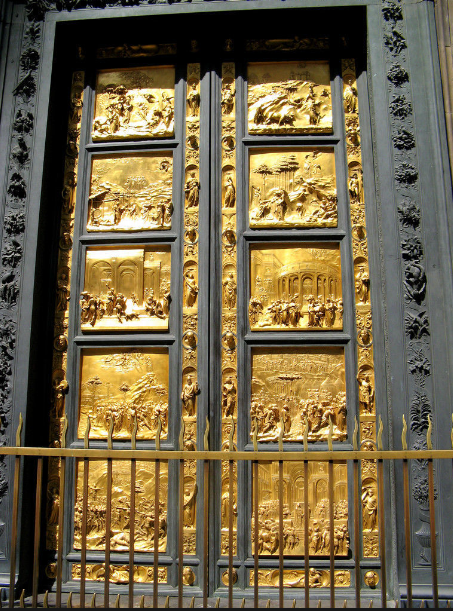
Lorenzo Ghiberti (1378-1455) won the commission to create the bronze doors for the Florentine Baptistery. There were a total of 28 bronze panels that he crafted, and all of them portrayed biblical stories. The entire project took 20 years to complete, but in the end, they turned out beautifully. Michelangelo famously said the panels were beautiful enough to form the literal gateway to heaven.
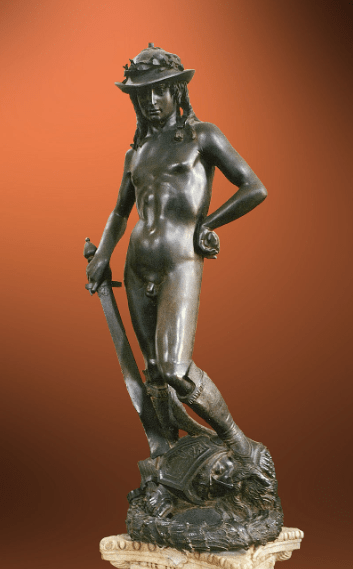
Donatello (1386-1466) was one of Ghiberti’s assistants, and he was a sculptor. One of his most famous sculptures was the statue of David in Florence. This sculpture completely revolutionized the industry. Statues from Rome and Greece often depicted people with their fingers in the air as they contemplated deep philosophical thoughts. All of those statues portrayed great men doing great things. The point of the art was to glorify men. This was not the case with Donatello’s sculpture of David. David was not portrayed as a great and strong man. Yes, his foot rested on the head of Goliath, but Donatello chose to portray him as a weak, and even feminine, man. What is more, David is naked in the sculpture. Donatello portrayed David as weak and made him naked for an artistic reason. He wanted to make the infamous king as weak as possible, yet triumphant over Goliath, to send the message that God was David’s armor and his strength. That is the central message of that famous underdog story. God was David’s strength. In this respect, Donatello’s sculpture was absolutely genius.
Mosaccio (1401-1328) was the first painter to use Brunelleschi’s mathematical principles regarding perspective in art. He showed this in his masterpiece The Holy Trinity Fresco. This painting portrays Christ’s crucifixion with God the Father standing behind Him. The amount of perspective and shading used in the painting made it revolutionary. There was nothing quite like it. God the Father looks like He was actually standing behind Jesus, and the painting looked realistic by Renaissance standards.
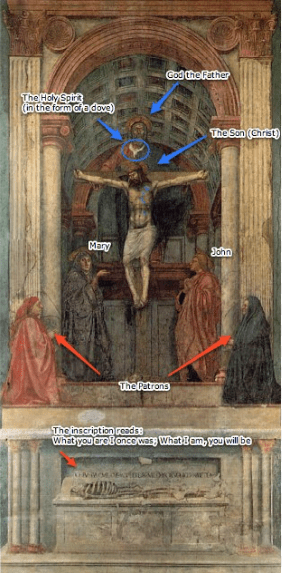
These three pieces of art help to show the way art was changing during the Renaissance. There was far more emphasis on the individual characteristics of each person, and there was more emphasis on shading and perspective.
 Asher Sisneros
One thought on “Early Renaissance Art”