
Luther’s On the Freedom of the Christian: History of the Reformation

Luther argues that Jesus Christ desires His followers to trust and believe in Him to provide them with salvation. And when they do so, He will glorify them and dress them in garments of truth and righteousness, sanctifying their souls and regenerating their hearts.   … More Luther’s On the Freedom of the Christian: History of the Reformation
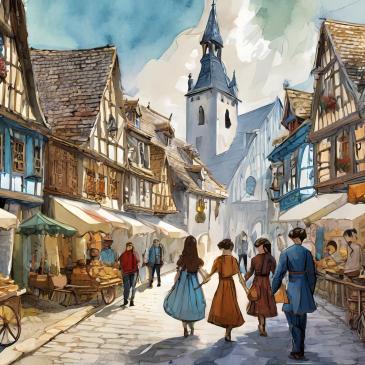
How Pope Gregory the 7th Gave the West Liberty

Pope Gregory the 7th started the Gregorian Reform. Lay control was a corrupt merger between the state and the church, giving unordained men the authority to appoint abbots, bishops, and popes. It became prominent during the 10th and 11th centuries in Europe as feudalism created a noble-centered political atmosphere. The merits of feudalism can be … More How Pope Gregory the 7th Gave the West Liberty

Procopius on Emperor Justinian

Emperor Justinian ruled the Byzantine Empire. An economic shift started when Constantine built Constantinople. Gradually, Rome’s power dwindled. When Odoacer conquered the city of Rome—the former military capital of the world—the entire earth shook. Powers shifted and Constantinople led the remaining Eastern Roman Empire, what’s commonly referred to as the Byzantine Empire. Justinian is the … More Procopius on Emperor Justinian

Carolingian Renaissance

            The Carolingian Renaissance lasted through the reign of Emperor Charlemagne and his son, King Louis the Pious. It was a cultural movement among the Franks to elevate them into a civilized culture. Their barbarian heritage haunted them, and the Carolingian Renaissance was a self-conscious cultural ploy. It attempted to Romanize the Franks and preserve … More Carolingian Renaissance