Note: this article was originally submitted to Mentor Frank Demos at Thomas Edison State University as an assignment for his class, FIL-1100: American Cinema. It was then subsequently published on AsherSisneros.com
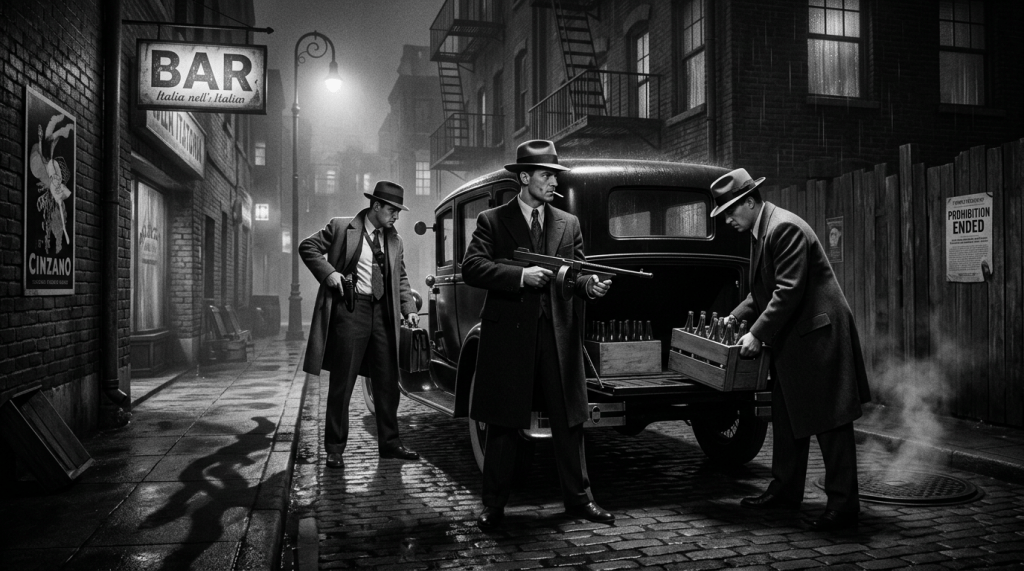
There is nothing like a good gangster film. They have dapper clothing, loud machine guns, old cars, and thick Italian accents. But even more than all of that, gangster films have interesting characters who are bright and ambitious, often misguided, and loyal to a fault. Yet underneath the veneer of a classy Italian gentleman lies a heart corrupted by crime. For although they often hold themselves up as moral men with standards who are just in a dirty business, they all become tainted as their moral compass is seared. And eventually, they all fall under the heavy burden of their sin. And their fall is often even more climactic than their rise, leaving audiences with the moral satisfaction that those who sow to the “flesh will of the flesh reap corruption” (The Holy Bible: New King James Version 1982, Galatians 6:8a)
Scarface: The Shame of a Nation (Hawks 1932) follows a similar theme with a rise and a fall. In the beginning of the film, Tony Camonte assassinates his boss Louis Costillo and moves up the ranks to work as Johnny Lovo’s right-hand man as they bootleg liquor in Chicago. But while Lovo seeks profits through an efficiently run business, Camonte says the family bosses are weak and has plans to outmaneuver them all. First, he blackmails clients into buying more liquor than they need; then he steals clients from the other families through force; and, finally, he preemptively launches strikes on other gang leaders in order to become the most powerful mob boss in Chicago. Camonte then takes out his boss Johnny Lovo and sits on top of Chicago’s most powerful criminal network.
Yet almost as soon as he finally rises to the top, he has a dramatic fall. While he is away on vacation, his loyal best friend Guino Rinaldo falls in love with his sister and marries her with expectations to surprise Camonte. But when Camonte returns and sees Guino and his sister together, he feels betrayal and follows the one rule that got him to the top in the first place: always shoot first. So he kills Guino. Yet the cops, with Guino’s body, finally have the kind of evidence that they need to apprehend Camonte. When this merciless gangster is surrounded by the power of the law, he finally shows fear. The man who killed so many without mercy finally begs and cries for mercy himself, and when he tries to run, he is shot down.
So often, what audiences love to see is justice. They love to see the underdog who works diligently achieve greatness, and they love to see corrupt men with power fall under the burden of their sin. As the prophecy of Isaiah says, “‘There is no peace,’ says the LORD, ‘for the wicked’” (New King James Version 1982, Isaiah 48:22). And it is this sense of justice that makes Scarface (1932) such an archetypal, model gangster film.
References
The holy Bible: New King James version. (2006). Thomas Nelson. (Original work published 1982).
Hawks, H. (Director). (1932). Scarface: The shame of a nation. [Film]. Caddo Company.






Leave a Reply