-
 Continue reading →: The Difference Between Formal and Informal Imperialism
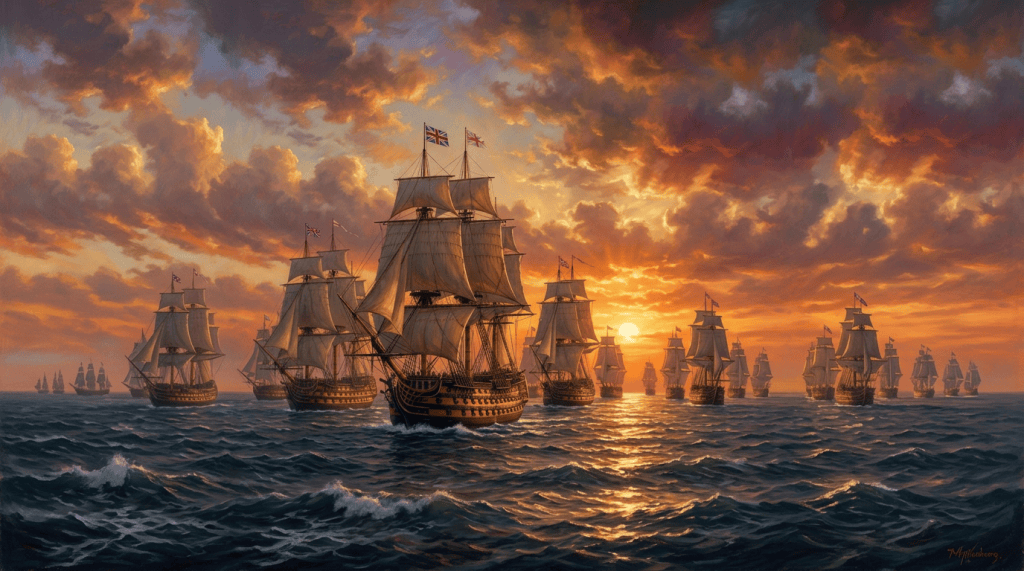
With the course of history, some nations have grown strong; others have grown weak. And, in a social Darwinian sense, the “fittest” nations have survived and consumed the others. But that domination never lasts forever. As history shows, every empire eventually falls. Like dogs, they grow old, become weak, and…
-
Continue reading →: A Very Small Price
Today, some people seem to have borderline sympathy for Hitler, seeing him as a deliverer to the German people following the impossibly high reparations imposed on them post-WWI. However, sympathy for the German people can become seriously misplaced when it evolves into sympathy for Hitler and his policies. After all,…
-
Continue reading →: Lenin, the Bolshevik Revolution, and the Soviet Union
Discontent was growing in Russia, and poverty and the Tsar’s incompetence only worsened the issue. A parliament, the Duma, was established in 1905 to Westernize Russia and make it more democratic. Still, Tsar Nicholas II held absolute de facto control over the Russian government. The heavy cost of WW1 continued…
-
Continue reading →: Philip Dru: The Guise of Welfare and the Death of Liberty
Philip Dru: Administrator by Edward M. House follows a brilliant West Point graduate’s rise to political power. From the beginning of the book and throughout all of his conversations with Gloria, who he later marries, Philip Dru shows interest in the greater welfare of society. Unfortunately, Dru rests on the…
-
Continue reading →: Woodrow Wilson and WW1 Bias
With WW1 raging across Europe, the United States claimed neutrality, but the Wilson administration was far from neutral. Throughout the war, the U.S. (justly) demonized Germany for breaking international law but ignored Great Britain’s violations. This double standard continued beyond just the battlefield and onto the negotiating table. In an…
-
Continue reading →: Philip Dru and the 16th Amendment
Edward M. House, an influential advisor during Woodrow Wilson’s administration, wrote Philip Dru: Administrator (1912) during the beginning of the Progressive Era. Rapidly, U.S. politics became dominated by Progressive idealism and the hope for a brighter future. All of the country’s past classical liberal ideals regarding federalism, constitutionalism, limited government,…
-
Continue reading →: The Coming of WW1
On the eve of WW1, the European balance of power was changing. It was no longer the era immediately after the Congress of Vienna in 1815, and the same men who controlled foreign affairs in the post-Napoleonic world were a dying breed. The spreading nationalism of the Romantic period took…
-
Continue reading →: Modernism: Creation Through the Eyes of Apostate Men
Modernism is best understood through comparison with its two predecessors, Romanticism and Neoclassicism. The Neoclassical era began in the 18th century and emphasized the importance of the Greco-Roman ideals of logic and order, combined with the proper decorum of Europe and the Renaissance’s idea of effortlessness, i.e., sprezzatura. But by…
-
Continue reading →: O. Henry: America’s Greatest Writer?
The three most recent authors added to my catalogue of half-decent American writers are O. Henry, Jack London, and Ambrose Bierce. As Dr. Gary North likes to say, we have entered a new regime. In this case, that quote pertains to 19th-century American authors. This section first began with the…
-
Continue reading →: The German Kulturkampf
In short, the German Kulturkamp of the 1870s was a cultural schism between the Catholic Church and the State within the Prussian-dominated territories in Western Europe. With the rise of nationalism and imperialism across the West, nations looked skeptically towards foreign influences. To Chancellor Otto von Bismarck, arguably the most…
Hello,
I’m Asher

I’m a student at Thomas Edison State, finishing up my B.A. in philosophy. I’m also a law school hopeful. You can read my random and infrequent blog posts here, getting a glimpse of the nonsense in my brain.
Let’s connect
Join the fun!
Stay updated with my newsletter.