-
Continue reading →: Why Did Boccaccio Invoke God in The Decameron?
Many Greek and Roman classics start their fascinating—and often debaucherous—tales by invoking one or more gods, and Boccaccio does something similar in The Decameron. His book, which is a Renaissance classic, chronicles the stories told by ten people who survived the Black Death. With all their colleagues killed, they temporarily…
-
Continue reading →: Petrarch and the Spirit of the Renaissance
Petrarch is often considered the father of the Renaissance. He was born into a legal family and followed in his father’s footsteps by studying law at Bologna. It was among the most prestigious universities at the time, but Petrarch was not interested in law. Frequently, poetry distracted him from his…
-
Continue reading →: Key Ideas of the Renaissance
The Renaissance marked a rekindled interest in Roman and Greek literature in the West. For hundreds of years, the writings of Plato and Cicero were merely footnotes in history. The West had no access to those writings, even though medieval writers frequently referenced them. Towards the end of the High…
-
Continue reading →: Providence in Historical Chaos: God’s Order in the 14th-Century Crises
Divine providence exists in history. An invisible hand guides the events of today, yesterday, and tomorrow. Anyone who looks through the pages of history can see the clear presence of this supernatural force. It is almost as if all lives are single chapters in a grander story that are all…
-
Continue reading →: The Black Death (1347-1350)
The Black Death (1347-1350) was a catastrophic plague that slaughtered between ¼ and ½ of the European population in the space of three years. Such lethal numbers absolutely dwarf anything any living American has witnessed, including COVID-19. To translate the Black Death’s lethality into numbers that might resonate more with…
-
Continue reading →: The Little Flowers of St. Francis: Monks in Hell
The Little Flowers of Saint Francis chronicles the miracles of the Order of Friars Minor. As enjoyable as it is to read about the wondrous miracles in the book, Little Flowers scarcely provides the common man with any hope. Contrary to the Gospel, the book indirectly tells the layman purgatory—hellfire—is…
-
 Continue reading →: Little Flowers of St. Francis: The Road to Salvation
The Little Flowers of St. Francis is a biographical book following the ministry of St. Francis. It focuses on the piety of the Friars Minors—the religious order Francis created—and the many miracles they did. They functioned as a monastic order without a monastery, traveling from town to town preaching the…
-
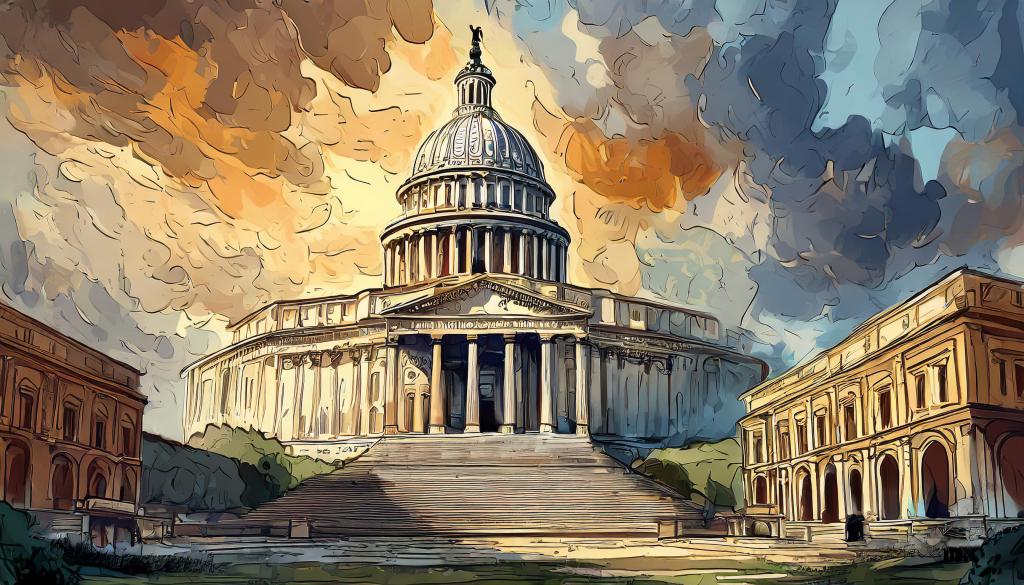 Continue reading →: Imperial and Papal Conflicts During the High Middle Ages
The High Middle Ages were littered with imperial and papal conflicts. The Hohenstaufen family was notorious for garnering the hatred of various popes. From a glance, a student of history may get the impression that popes were continually engaged in proxy wars with the Holy Roman emperors. Such an impression…
-
 Continue reading →: Discrepancies in the Song of Roland
The discrepancies within The Song of Roland make the entire poem laughable. It is a wonder why anyone takes the book seriously. Though the book is filled with fascinating betrayals and gripping battles, the author repeatedly contradicts himself throughout the book, begging the question of why it lasted the test…
-
 Continue reading →: Why the West Experienced Prolonged Economic Growth
The West gained an economic advantage over the rest of the world during the High Middle Ages. Somehow, the political and business environment helped to propagate a successful economy. It resulted in prolonged economic growth in the West, an advantage they held for centuries. But how? The answer is competition.…
Hello,
I’m Asher

I’m a student at Thomas Edison State, finishing up my B.A. in philosophy. I’m also a law school hopeful. You can read my random and infrequent blog posts here, getting a glimpse of the nonsense in my brain.
Let’s connect
Join the fun!
Stay updated with my newsletter.